
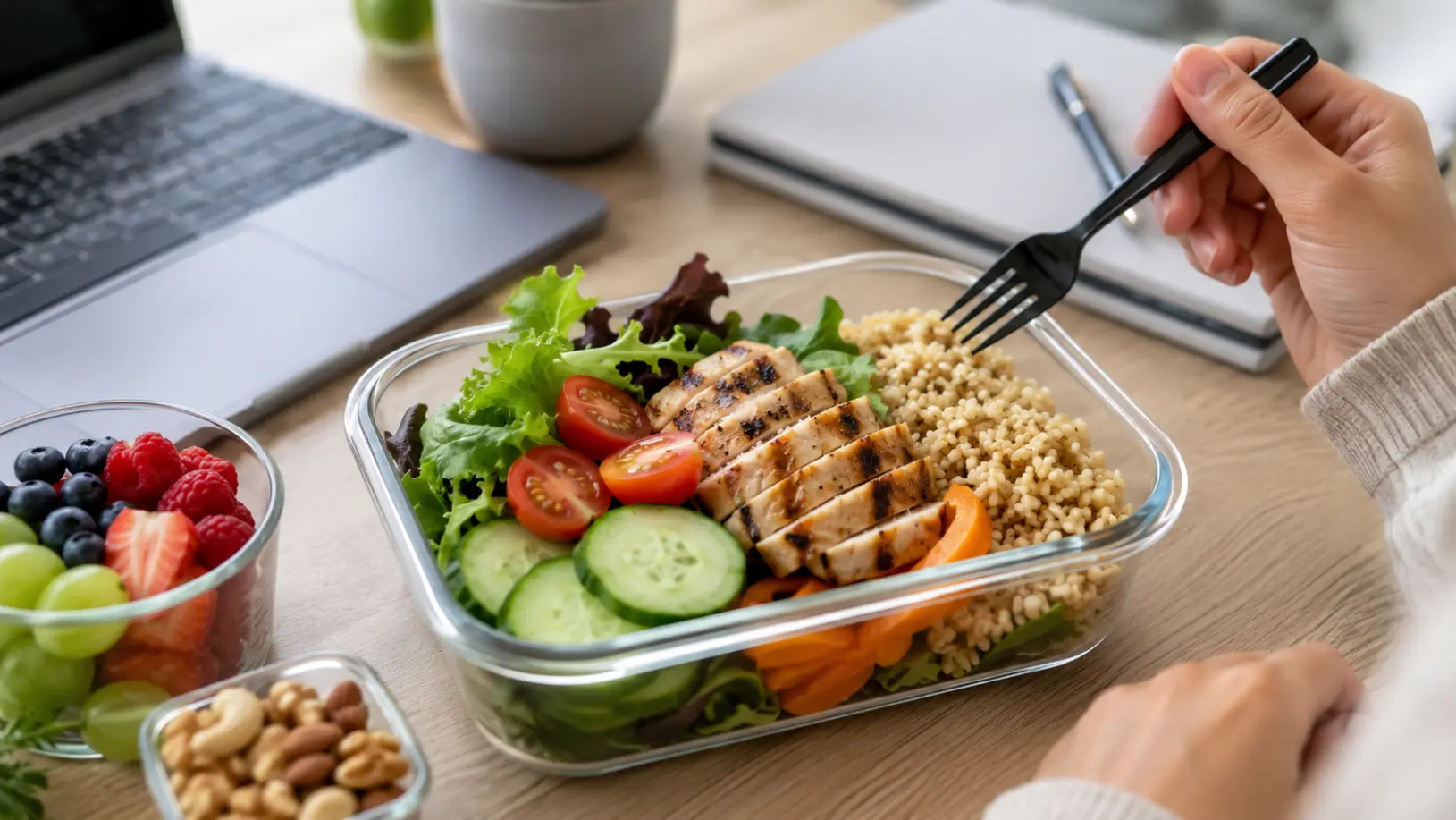
Healthy meal prep helps busy office workers eat balanced meals without cooking every day. The most practical approach is to choose meals that combine vegetables, protein, quality carbohydrates, and healthy fats in ready-to-eat portions. With careful planning, proper storage, and reliable ingredients, workers can reduce unhealthy food choices while saving time during demanding workdays.
For many office workers, eating well becomes difficult long before lunchtime begins. Mornings often start with traffic, meetings, urgent messages, and unfinished tasks from the previous day. Preparing breakfast or packing lunch can feel unrealistic. When hunger arrives, convenience usually becomes the main priority. Fast food, sweet drinks, instant noodles, and heavily processed snacks may become regular choices because they are quick and easy to find.
The problem is not a lack of interest in healthy eating. Most workers understand that vegetables, fruit, protein, and balanced meals support energy and concentration. The real challenge is limited time. Shopping for fresh ingredients, washing produce, cutting vegetables, cooking several dishes, and cleaning the kitchen can take hours. Repeating this process several times a week is difficult for people with long working hours.
Healthy meal prep creates a more manageable system. Instead of deciding what to eat when already hungry, meals are prepared or selected in advance. This reduces daily decision-making and makes balanced food easier to access. A prepared salad, grain bowl, fruit portion, or complete lunch box can be taken from the refrigerator and eaten with minimal effort.
A balanced meal prep should include more than a small bowl of lettuce. Vegetables provide fiber, vitamins, minerals, and volume, but they need other food groups to create a satisfying meal. Protein sources such as chicken, eggs, fish, tofu, beans, or tempeh help maintain fullness. Brown rice, potatoes, quinoa, whole-grain bread, or other quality carbohydrates provide energy for the working day. Seeds, avocado, nuts, or a moderate amount of dressing can add healthy fats and improve flavor.
Portion planning also matters. A meal that is too small may lead to snacking soon after lunch. A meal that is too heavy may cause discomfort and reduced focus during afternoon meetings. The right portion depends on activity level, body size, health needs, and personal goals. A practical lunch should feel satisfying without making the worker feel overly full.
Freshness and food safety are essential when meals are prepared ahead of time. Cooked foods and cut vegetables should be stored in clean, sealed containers and placed in the refrigerator promptly. Wet ingredients and salad dressing should remain separate when possible to prevent vegetables from becoming soft. Meals should not stay in a warm car, on a desk, or inside an unrefrigerated bag for extended periods.
Variety makes the routine easier to maintain. Eating the same meal every day can quickly become boring, even when it is healthy. Workers can rotate different vegetables, fruits, proteins, dressings, and carbohydrate sources throughout the week. One day may include a chicken salad bowl, while another may feature tofu, fresh vegetables, and brown rice. Simple changes in texture and seasoning can make meal prep feel less repetitive.
Healthy snacks can support the plan between meals. Fresh fruit, cut vegetables, yogurt, nuts, or other portioned options are usually more useful than relying on cookies or sugary drinks. Keeping these foods available at the office reduces the chance of making impulsive choices when energy begins to drop.
Not every worker has time to prepare several meals at home, even on weekends. In this situation, a trusted ready-to-eat meal provider can remove the most time-consuming steps. Green Groceries offers high-quality vegetables, fresh fruit, salads, and healthy meal prep options that fit into busy office routines. Carefully prepared portions allow workers to enjoy fresh, balanced food without handling every stage of shopping and cooking.
Healthy eating does not require a perfect schedule or hours in the kitchen. It requires a system that makes better choices easier during busy days. With balanced portions, fresh ingredients, safe storage, and convenient meal options, office workers can maintain a healthier routine without adding more pressure to their working week.


